
Introducing Mediterranean tortoises
What tortoises are, and the four species this course covers.
~8 minutes
About this course
This course focuses on four commonly kept Mediterranean and nearby species:
- Hermann's tortoise (Testudo hermanni)
- Spur-thighed tortoise (Testudo graeca)
- Marginated tortoise (Testudo marginata)
- Horsfield's tortoise (Testudo horsfieldii)
It also explains why identifying the exact species and, where relevant, subspecies is essential. In particular, not every spur-thighed tortoise should be hibernated. The course covers hibernation, overwintering, UK outdoor housing, nutrition, UVB, health and responsible breeding.
The course has five modules. Each module ends with a glossary of key terms and a multiple-choice quiz to check your understanding.
Important husbandry disclaimer
Everyone has their own way of keeping tortoises, and husbandry practices can differ between experienced keepers, breeders and veterinary professionals. The recommendations in this course reflect knowledge gained through more than 15 years of practical experience keeping and breeding reptiles in captivity, alongside established husbandry information and animal-welfare principles.
These recommendations are intended as informed guidance, not the only acceptable approach. Keepers should remain open to new scientific evidence, developments in husbandry and the individual needs of each animal.
Introduction to tortoises
Tortoises are land-dwelling reptiles belonging to the order Testudines. Unlike aquatic turtles and terrapins, tortoises are adapted primarily for life on land.
They have evolved a distinctive body structure, including a protective shell, strong limbs and specialised feeding anatomy. Their physical characteristics and behaviours reflect the environments in which their species evolved.
Mediterranean tortoises are popular in captivity because several species remain relatively small compared with larger tropical tortoises. However, their care is not necessarily simple. They require suitable outdoor access, strong UVB exposure, controlled heating, appropriate nutrition and careful seasonal management.
Many tortoises can live for several decades, with some reaching 50–100 years or more. Acquiring one should therefore be regarded as a substantial long-term commitment.
Common Mediterranean species
There are several species commonly encountered in the UK pet trade. Although their general husbandry requirements overlap, their natural habitats and seasonal behaviour are not identical.
Hermann's tortoise (Testudo hermanni)
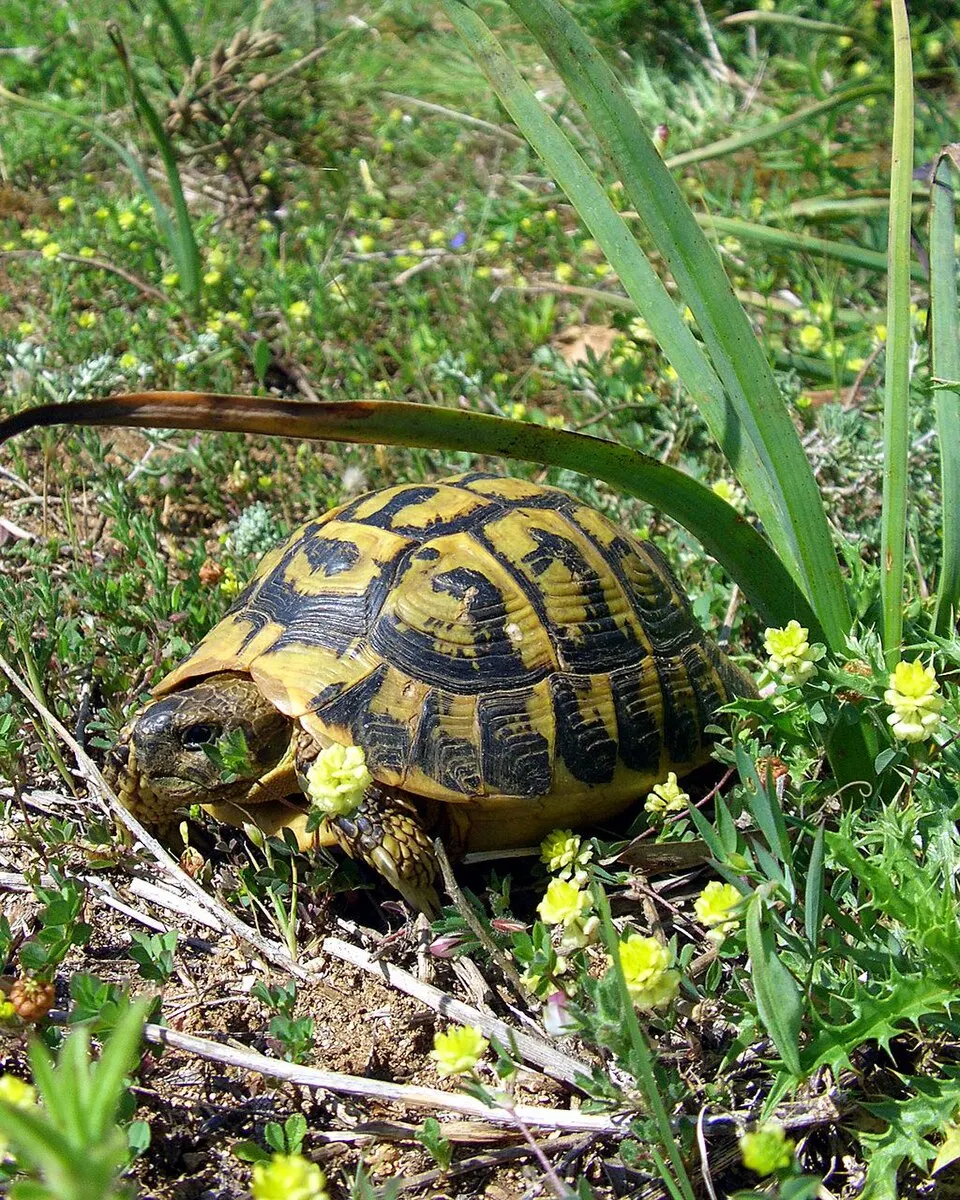
Photo 1.1 — A Hermann's tortoise (Testudo hermanni hermanni) in Mallorca, showing the bold yellow and black shell. Photo: Orchi, CC BY-SA 3.0, via Wikimedia Commons.
Hermann's tortoises originate from southern Europe, including parts of Italy, the Balkans and surrounding regions.
They inhabit environments such as Mediterranean scrubland, open woodland, grassland and areas of mixed vegetation.
They are commonly recognised by their yellow and dark brown or black shell markings. Many individuals have distinctive dark markings on the underside of the shell, although appearance varies between populations.
Hermann's tortoises are among the most commonly kept Mediterranean species and are generally considered suitable for outdoor and indoor husbandry in the UK when conditions are appropriate.
Spur-thighed tortoise (Testudo graeca)
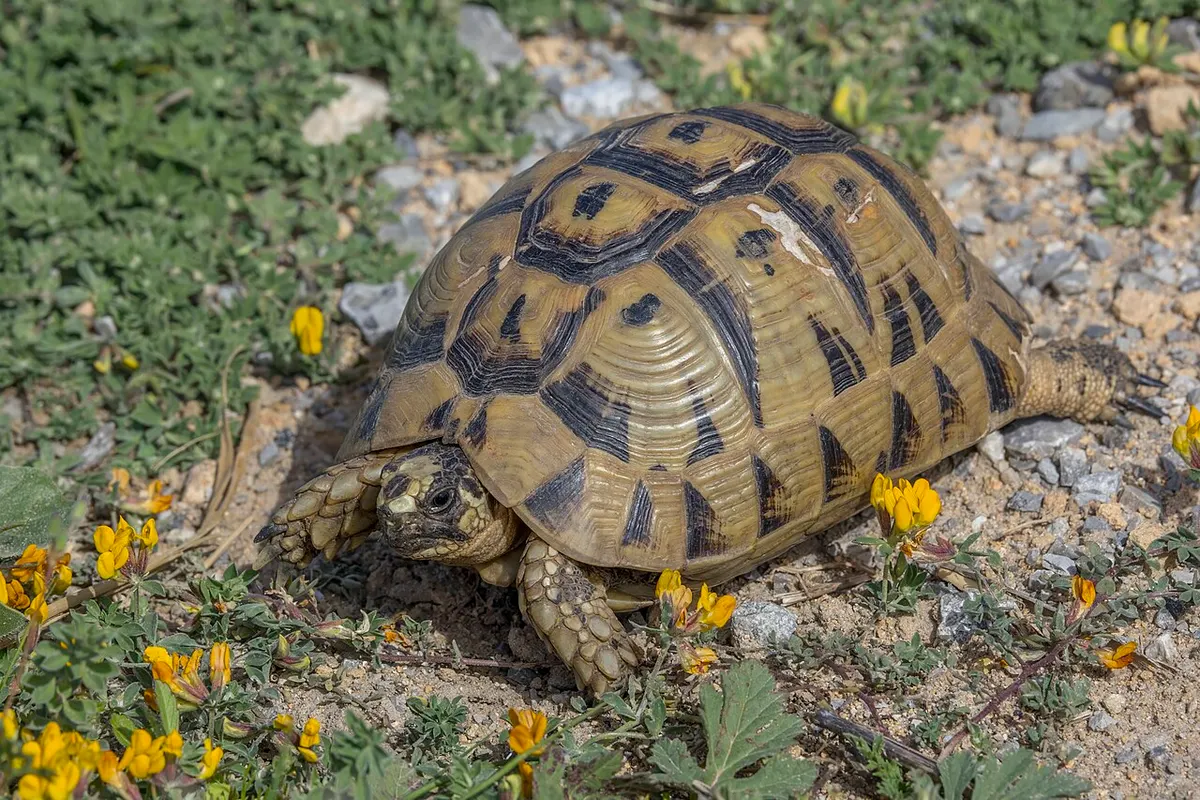
Photo 1.2 — A Tunisian spur-thighed tortoise (Testudo graeca nabeulensis) at Cap Bon, Tunisia. North African populations like this one should not be assumed to hibernate. Photo: Charles J. Sharp, CC BY-SA 4.0, via Wikimedia Commons.
The spur-thighed tortoise has a broad natural distribution extending across parts of southern Europe, North Africa and western Asia.
The name refers to the prominent conical scales or spurs found on the thighs of many individuals.
This species is particularly important to identify correctly because Testudo graeca contains several subspecies and geographical populations with different environmental requirements.
Some populations naturally experience seasonal dormancy, while others from warmer regions may not undergo conventional hibernation. The origin and identity of an individual must therefore be established before any decision is made about overwintering.
Marginated tortoise (Testudo marginata)
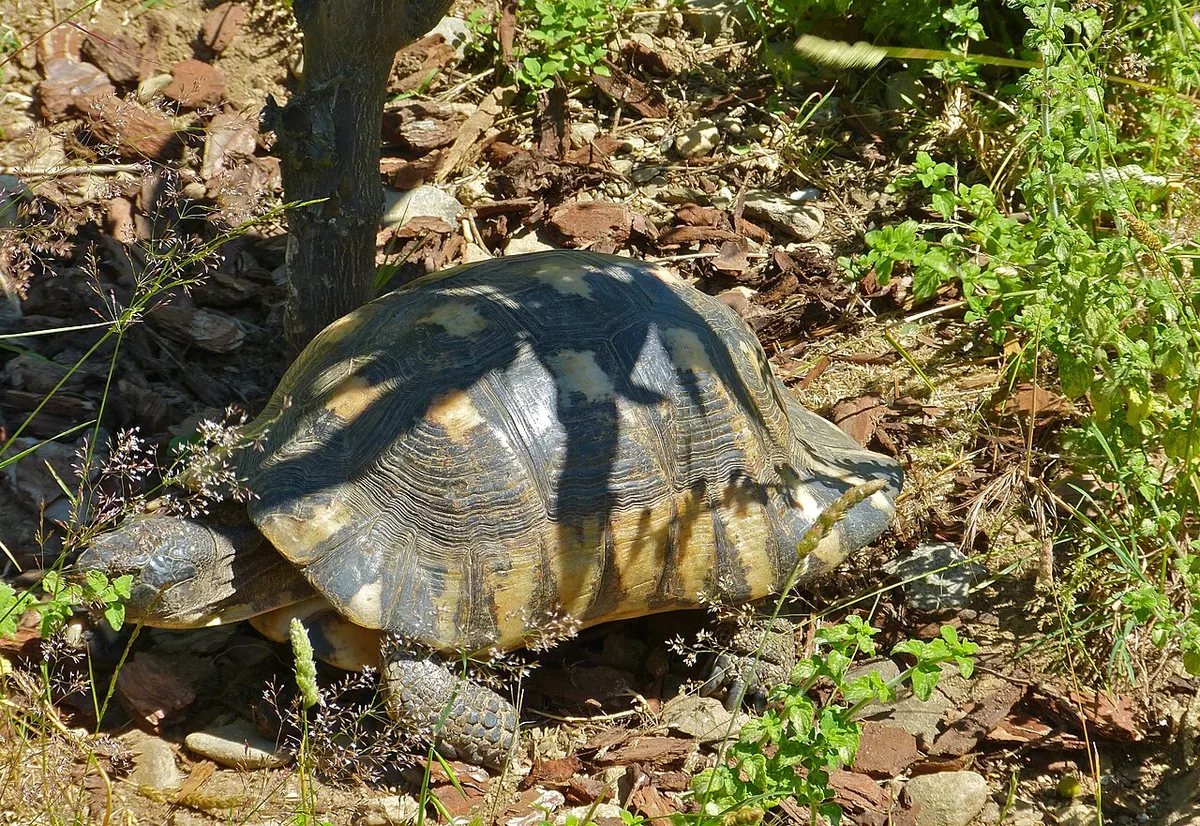
Photo 1.3 — A male marginated tortoise. Note the flared, skirt-like rear edge of the shell. Photo: Bernard Dupont, CC BY-SA 2.0, via Wikimedia Commons.
The marginated tortoise originates primarily from Greece and surrounding areas.
It is the largest of the commonly kept Mediterranean tortoises. Adults are recognised by the distinctive flared rear edges of the carapace, which give the shell a skirt-like appearance.
Its larger eventual size means that enclosure planning is particularly important. A small tortoise table may be suitable temporarily for a juvenile but will not provide adequate long-term accommodation for a mature animal.
Horsfield's tortoise (Testudo horsfieldii)
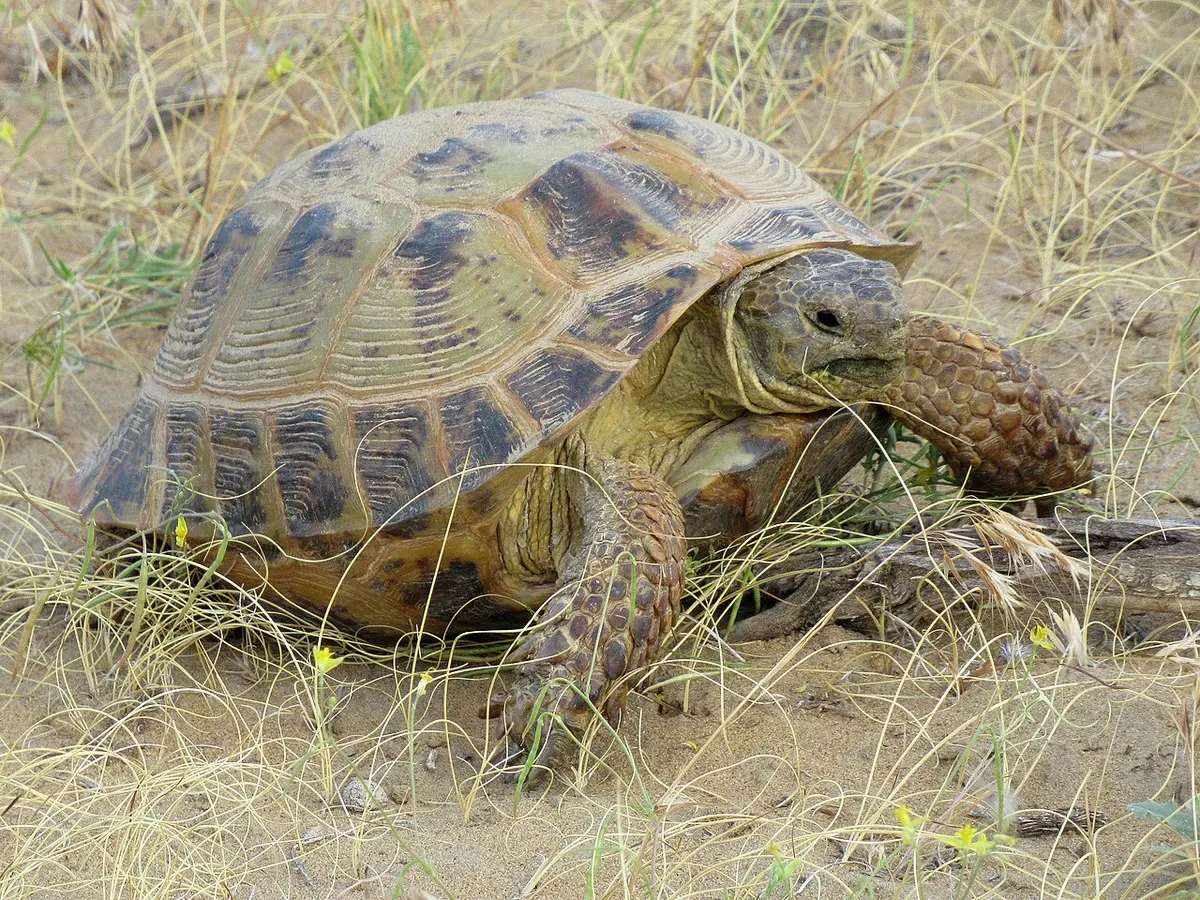
Photo 1.4 — A wild Horsfield's tortoise in Central Asia, with the rounded, flattened shell typical of the species. Photo: Alexander A. Fomichev, CC BY-SA 4.0, via Wikimedia Commons.
Also known as the Russian tortoise or four-toed tortoise, this species originates from Central Asia, including Kazakhstan, Uzbekistan, Turkmenistan, Afghanistan and north-eastern Iran. Some authorities place it in its own genus, as Agrionemys horsfieldii.
It inhabits relatively open, dry environments, including steppe, scrubland and sandy or rocky terrain.
Horsfield's tortoises are strong diggers and can excavate substantial burrows in the wild. Their captive environment should provide opportunities for digging and retreating underground.
They generally tolerate temperature fluctuations better than some other Mediterranean tortoises but are particularly unsuitable for persistently damp conditions.
The four species compared
| Species | Typical adult shell length | Key features |
|---|---|---|
| Hermann's | Around 15–20 cm | Yellow and black shell; usually a split scute above the tail and a horny tip to the tail |
| Spur-thighed | Around 15–25 cm, varying by population | Conical spurs on the thighs; usually a single scute above the tail |
| Marginated | Up to around 30–35 cm | The largest; adults have a flared, skirt-like rear edge to the shell |
| Horsfield's | Around 13–20 cm | Rounded, flattened shell; four claws on each front foot; a strong digger |
Sizes vary between individuals, sexes and populations. Females are usually larger than males.