
Introducing the royal python
The species, its classification and what this course covers.
~8 minutes
About this course
Welcome to the HWA Royal Python Care course.
This course has been developed to provide students with an extensive understanding of one of the most recognisable species within the captive reptile-keeping community.
The royal python, commonly referred to as the ball python, is a non-venomous constrictor native to Africa. Its manageable adult size, distinctive appearance and generally calm temperament have contributed to its popularity amongst reptile keepers worldwide.
However, successful captive care involves considerably more than providing an enclosure, a heat source and regular meals. Understanding the species' natural history, environmental requirements, nutritional needs, behaviour and health is essential to maintaining a healthy animal throughout its life.
Throughout this course, we will explore the royal python from its natural origins through to its long-term management in captivity. We will also examine breeding, genetics, reproductive biology and the responsibilities associated with keeping and breeding this species.
The objective is not simply to teach students how to keep a royal python, but to help them understand why particular husbandry practices are important and how to recognise and respond to the animal's needs.
The course has five modules. Each module ends with a glossary of key terms and a multiple-choice quiz to check your understanding.
Important husbandry disclaimer
Every reptile keeper has their own methods, experiences and approaches to animal husbandry. There can be differences in the way individual keepers manage their animals, and more than one method may achieve appropriate welfare outcomes.
The information presented throughout this course reflects what we at the Herpetological & Wildlife Academy have learnt through over 15 years of keeping, maintaining and breeding reptiles in captivity.
Our recommendations are based on our practical experience, established husbandry knowledge and recognised animal welfare principles.
Reptile husbandry is continually developing as further research becomes available. We encourage students to continue their education, consider new evidence and adapt their practices where necessary.
Our priority is always the animal's health, welfare and ability to display natural behaviours. Individual animals may also have specific requirements that need to be considered.
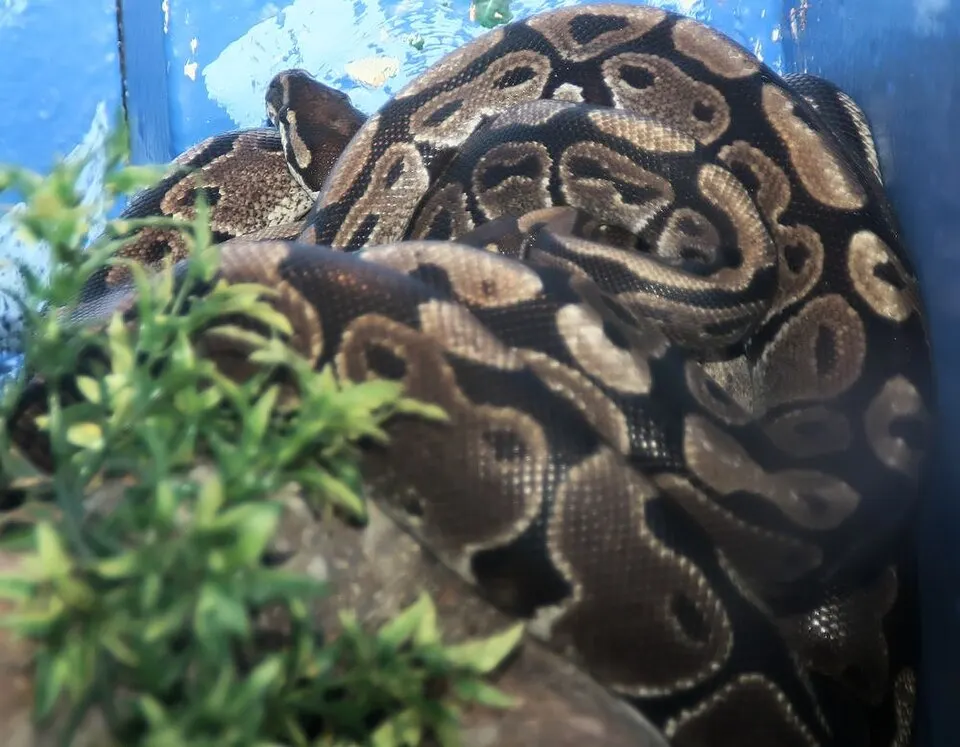
Photo 1.1 — A royal python (Python regius), one of the most widely kept snakes in the world. Photo: David J. Stang, CC BY-SA 4.0, via Wikimedia Commons.
Introduction to the species
The royal python (Python regius) belongs to the family Pythonidae, which contains the world's python species.
It is a non-venomous constrictor that uses its muscular body to subdue prey before swallowing it whole.
The species is particularly recognisable for its relatively compact body, broad head, attractive natural patterning and characteristic defensive behaviour of curling into a tight ball when threatened.
The name ball python is widely used internationally, particularly in North America. The name royal python is more commonly used in the United Kingdom and parts of Europe.
Royal pythons are generally considered suitable for keepers who are prepared to understand and meet their specialist requirements. Their relatively manageable adult size should not be mistaken for a lack of husbandry complexity.
They are naturally secretive animals, often spending significant periods concealed within protected refuges. This is an important consideration when designing a captive environment.
Scientific classification
Scientific classification allows us to understand the royal python's position within the animal kingdom and its relationship to other species.
| Rank | Classification |
|---|---|
| Kingdom | Animalia |
| Phylum | Chordata |
| Class | Reptilia |
| Order | Squamata |
| Suborder | Serpentes |
| Family | Pythonidae |
| Genus | Python |
| Species | Python regius |
The genus Python also includes species such as the Burmese python (Python bivittatus), Indian python (Python molurus) and African rock python (Python sebae).
Although these snakes share similarities, their adult sizes, geographical distributions, behaviours and environmental requirements differ.
It is therefore important to study each species individually rather than applying identical husbandry practices across all pythons.