
What is reptile conservation?
Explain what reptile conservation is, distinguish short-term animal rescue from long-term conservation and describe why protecting habitats is essential.
~9 minutes
About this course
Welcome to Introduction to Reptile Conservation, from the Herpetological & Wildlife Academy.
Across twelve modules you will explore what reptile conservation means, the ecology of reptiles, the threats they face, the people who protect them, how conservation research and fieldwork are carried out, habitat protection, wildlife trade and the law, conservation around the world, conservation breeding and species recovery, climate change, community engagement, and the practical skills that support responsible fieldwork.
Each module ends with a glossary and a quiz: ten multiple-choice questions plus a written question where you explain what you have learned in your own words.
Important: This course is an introduction. It does not qualify you to capture, handle, mark or sample wild reptiles, or to carry out licensed survey work. Those activities may need specialist training, permits and supervision, and the rules differ between countries.
About your course author
I'm Caleb Wright, the owner and founder of Wright's Reptiles, a specialist reptile store in the UK. I've worked extensively in reptile rescues, shops and breeding facilities, and over the years I've hired, trained and managed teams of people who work with reptiles.
About this module
Welcome to your first module of Introduction to Reptile Conservation. Throughout this module, you will discover what reptile conservation means, why reptiles are important to the natural world and how conservationists work to protect them.
You will explore the ecological roles of reptiles, learn the difference between animal welfare and conservation, and discover why protecting individual animals is only one part of a much bigger picture. You will also be introduced to conservation research, extinction risk and the importance of using scientific evidence when making decisions about wildlife.
By the end of this module, you will have a solid foundation for understanding reptile conservation and be ready to explore the specialist knowledge and practical skills covered in the following modules.
By the end of this lesson, you will be able to explain what reptile conservation is, distinguish short-term animal rescue from long-term conservation and describe why protecting habitats is essential.
Understanding the meaning of conservation
Reptile conservation is the process of protecting reptile species, their natural habitats and the environmental conditions they need to survive and reproduce.
As you begin studying conservation, it is important to understand that conservation is not simply about rescuing injured animals or preventing individual reptiles from being killed. Although these actions can be valuable, conservation also involves understanding entire populations, identifying threats and developing long-term strategies to prevent declines.
For example, imagine a population of snakes living in a woodland that is gradually being cleared for housing. Rescuing snakes found during construction may save individual animals, but it does not address the loss of their habitat. A more comprehensive conservation approach would investigate the population, assess the remaining habitat, identify important shelter and breeding areas, and determine how the woodland could be protected or connected to other suitable habitats.
You will learn throughout this course that effective conservation focuses on the reasons wildlife is threatened, not just the immediate consequences.
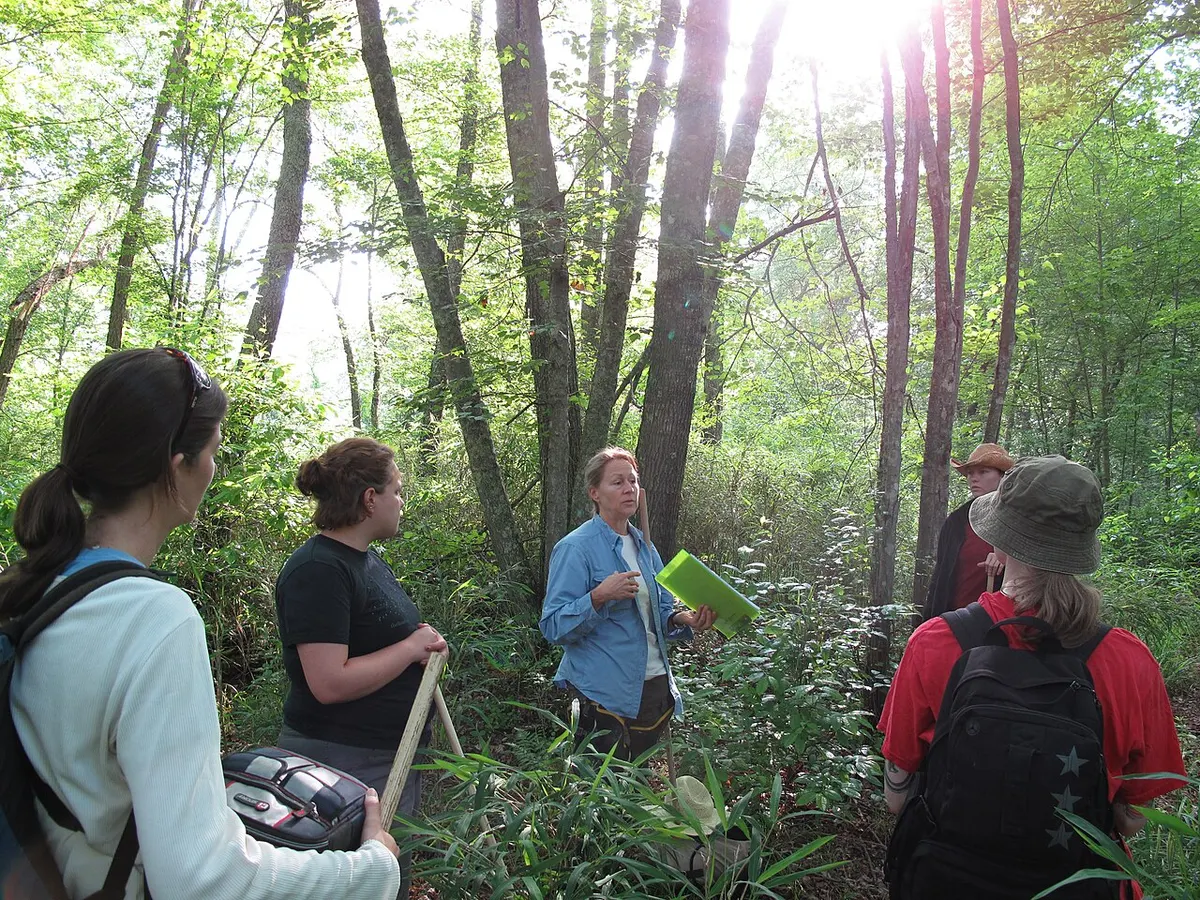
Photo 1.1 — A survey team discussing bog turtles (Glyptemys muhlenbergii) found during fieldwork. Conservation starts with understanding the population and its habitat. Photo: U.S. Fish and Wildlife Service, public domain, via Wikimedia Commons.
Conservation at different levels
Conservationists may work at several different levels, depending on the species and the problem they are trying to solve.
- Individual animals: Supporting the rescue or rehabilitation of an injured reptile where appropriate.
- Populations: Monitoring groups of the same species living within a particular area.
- Species: Developing strategies to reduce extinction risk across a species' range.
- Habitats: Protecting or restoring environments that support reptile populations.
- Landscapes: Maintaining connections between habitats so animals can move between areas.
- International conservation: Supporting cooperation between countries to address issues such as wildlife trafficking and cross-border habitat protection.
These levels often overlap. A project designed to protect one threatened snake species may also involve restoring vegetation, educating local communities and improving the management of a protected area.
Why conservation requires long-term thinking
Reptiles can face threats that develop gradually over many years. Habitat fragmentation, changes in climate, pollution and unsustainable collection may affect a population long before its decline becomes obvious.
Conservationists therefore need to investigate what is happening, collect reliable information and monitor whether their actions are producing meaningful improvements.
A project should not be considered successful simply because animals were released, trees were planted or an area was designated as protected. Conservationists must consider whether these actions actually improve the conditions required for wildlife to survive.