
Introducing the crested gecko
Classification, size and lifespan, and where crested geckos come from.
~8 minutes
About this course
The crested gecko is an arboreal species native to New Caledonia. Its distinctive appearance, manageable size and adaptability have made it one of the most popular reptiles in captivity. However, providing appropriate care requires an understanding of its natural environment, climbing behaviour, nutritional needs, temperature requirements and sensitivity to unsuitable husbandry.
This course explores the crested gecko from its natural origins through to responsible captive care and breeding. It is designed to help keepers develop the knowledge and practical skills needed to maintain healthy animals and provide an environment that supports natural behaviours.
The course has five modules. Each module ends with a glossary of key terms and a multiple-choice quiz to check your understanding.
Important husbandry disclaimer
Everyone develops their own approach to keeping reptiles, and husbandry practices can vary between experienced keepers and professionals. The recommendations in this course reflect knowledge gained through more than 15 years of practical experience keeping and breeding reptiles in captivity, alongside established husbandry information and animal-welfare principles.
These recommendations should be treated as informed guidance rather than the only acceptable way of keeping the species. Keepers should remain open to new scientific evidence, developments in husbandry and the individual needs of each animal.
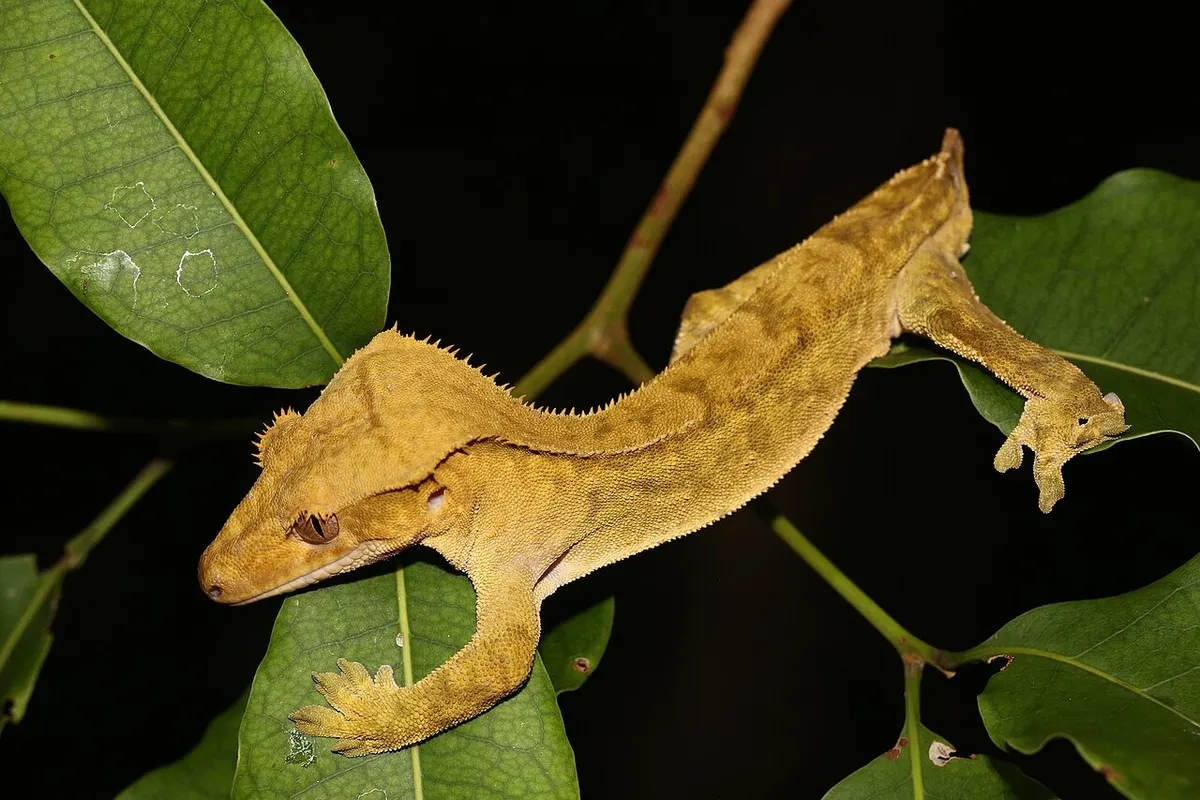
Photo 1.1 — A crested gecko (Correlophus ciliatus). The crest of enlarged scales running from above the eyes down the body gives the species its name. Photo: Lennart Hudel, CC BY 4.0, via Wikimedia Commons.
Introduction and classification
The crested gecko (Correlophus ciliatus) belongs to the family Diplodactylidae. It was formerly classified under the genus Rhacodactylus, which is why older books and care resources may refer to it as Rhacodactylus ciliatus.
| Rank | Classification |
|---|---|
| Kingdom | Animalia |
| Phylum | Chordata |
| Class | Reptilia |
| Order | Squamata |
| Family | Diplodactylidae |
| Genus | Correlophus |
| Species | Correlophus ciliatus |
It is recognised by the rows of enlarged scales that run from above its eyes along the sides of its head and down towards its body. These raised scales give the species its familiar crested or eyelash-like appearance.
Crested geckos are relatively small geckos, generally reaching approximately 15–20 cm in total length when the tail is included, and typically weighing around 35–55 g as adults. Their build is adapted for climbing, jumping and gripping vegetation. Their feet have specialised adhesive toe pads that allow them to move across branches, leaves and smooth surfaces.
With suitable care, crested geckos can live for approximately 15–20 years in captivity. Taking one on is therefore a long-term responsibility, not a short-term commitment.
Natural distribution and origins
Crested geckos are native to New Caledonia, a group of islands in the southwest Pacific Ocean, east of Australia.
They are associated with the humid forests of this region, where they inhabit trees, shrubs and dense vegetation. Their natural distribution is relatively restricted compared with many widespread reptile species.
One of the most interesting aspects of their history is that they were considered potentially extinct until they were rediscovered in 1994. Their rediscovery brought the species back into scientific attention and eventually led to the establishment of captive-bred populations.
The animals commonly kept in the UK today originate from captive-breeding programmes rather than being newly collected from the wild. Nevertheless, responsible sourcing remains important, and keepers should obtain animals from reputable breeders who can provide reliable information about their origin and history.